



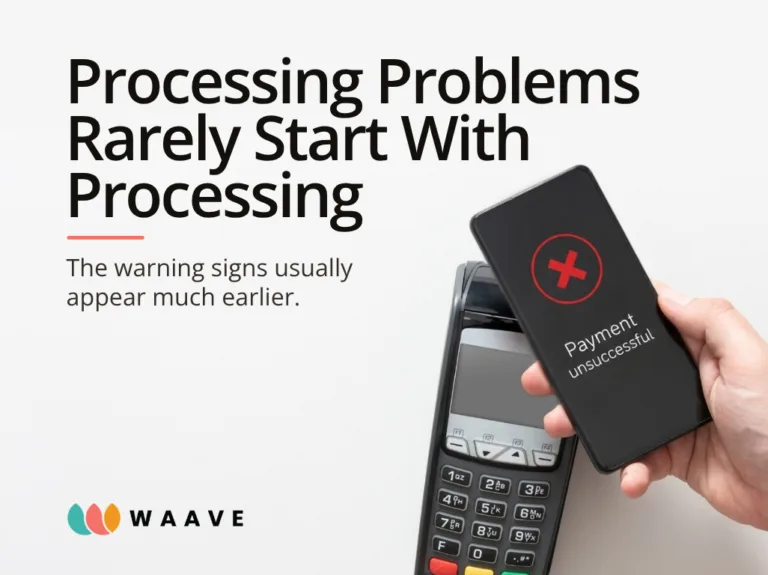
When a merchant suddenly loses the ability to accept credit cards, the first reaction is almost always the same:
“The processor shut us down.”
It’s an understandable conclusion. After all, the payment processor is where the interruption becomes visible. But in reality, processing problems usually begin weeks—or even months—before the processor takes action.
The payment itself is rarely the root cause.
Instead, the warning signs often appear elsewhere: on your website, in your marketing, in your product catalog, or in the way your business evolves after underwriting.
Understanding this distinction can help wellness sellers avoid costly interruptions before they happen.
The Processor Usually Sees the Last Symptom
Payment processors don’t monitor businesses only by looking at transactions.
Banks, acquiring institutions, and payment partners continually evaluate whether a merchant still fits the risk profile they originally approved. If that profile changes, questions begin to arise.
That change might have nothing to do with fraud or chargebacks.
It can be something as simple as:
- New products added to the website
- Product descriptions becoming more aggressive
- Missing or expired Certificates of Analysis (COAs)
- Shipping into restricted jurisdictions
- Compliance disclosures disappearing after a website redesign
- Marketing language drifting into prohibited claims
From the merchant’s perspective, nothing significant changed.
From the bank’s perspective, almost everything did.
Websites Change Faster Than Underwriting
Underwriting represents a snapshot in time.
The website reviewed during onboarding may look completely different six months later.
Many businesses add new collections, hire marketing agencies, redesign product pages, launch affiliate programs, or introduce seasonal promotions without considering how those changes affect compliance.
Every update can alter the risk profile that originally supported the merchant account.
That’s why many processing issues appear to come “out of nowhere.”
In reality, they are the result of dozens of small changes accumulating over time.
Compliance Isn’t Just About Regulations
Many wellness brands think of compliance as something required only by government agencies.
In practice, payment providers care just as much about how products are presented.
A product may be legal to sell, but the way it’s advertised can still create unnecessary risk.
Banks review factors such as:
- Product claims
- Website transparency
- Age restrictions
- Shipping practices
- Required disclaimers
- Supporting documentation
- Overall consistency across the site
These elements help financial institutions determine whether a merchant continues to meet their risk standards.
Chargebacks Are Often a Secondary Problem
Many merchants assume chargebacks are the main reason accounts encounter trouble.
Chargebacks certainly matter, but they frequently reflect deeper operational issues.
Confusing product pages, unrealistic customer expectations, missing policies, or misleading marketing can all increase disputes.
Reducing chargebacks often starts long before the customer reaches checkout.
Clear communication, transparent policies, and accurate product information help create a better purchasing experience while also supporting a healthier merchant account.
The Best Time to Solve a Processing Problem Is Before It Exists
The strongest merchants don’t wait for a warning letter.
They regularly review their websites, verify that compliance requirements remain in place, update documentation, and monitor new products before they go live.
This proactive approach protects more than payment processing.
It helps preserve banking relationships, reduces unnecessary underwriting reviews, and creates greater long-term business stability.
In today’s wellness industry, maintaining compliance is not simply about avoiding problems—it’s about demonstrating that your business continues to be the same trustworthy operation your bank originally approved.
How WAAVE Helps
At WAAVE, we believe stable payment processing starts long before a customer enters their credit card information.
Our compliance technology continuously monitors merchant websites, product catalogs, shipping restrictions, and transactional requirements to identify potential issues before they become banking problems. By helping merchants stay aligned with evolving compliance expectations, we reduce unnecessary risk and support stronger, more stable payment processing relationships over time.
The best processing problems are the ones that never happen because they were prevented before the first warning ever arrived.