


You find a wellness product you like. It’s in stock. Reviews look solid. You add it to your cart—only to see a message at checkout:
“This product cannot be shipped to your location.”
It’s frustrating, especially when you know the product is legal somewhere. So why can’t it be shipped to you?
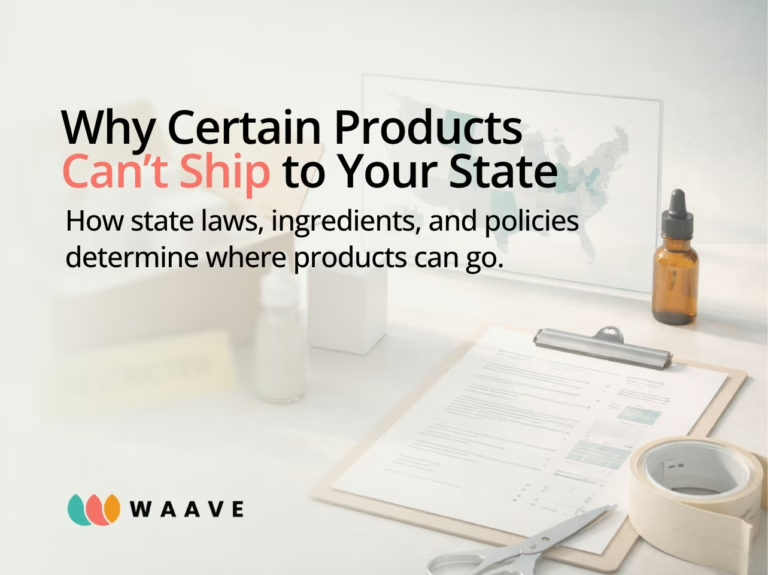
The answer usually comes down to one thing: state-level regulations. In the U.S., wellness laws don’t just vary by country—they vary by state, and sometimes even by county or city.
Here’s what’s really happening behind that checkout message.
1. Laws Aren’t the Same in Every State
When it comes to wellness products—especially hemp-derived items, botanicals, vapes, or specialty supplements—each state sets its own rules.
Some states allow certain ingredients. Others limit serving sizes, potency, formats (like gummies vs. beverages), or total package amounts. A few ban specific compounds entirely.
Even if a product is federally permitted, that doesn’t automatically mean every state accepts it under the same conditions.
For online sellers, this means building shipping rules that block restricted states to stay compliant with local law.
2. Ingredient-Specific Restrictions
Certain wellness categories are more likely to face shipping limits. For example:
- Hemp-derived cannabinoids (like Delta-8 or Delta-9)
- Kratom
- Vapor products
- Research compounds
- High-potency supplements
States may regulate:
- Milligrams per serving
- Total milligrams per package
- Labeling requirements
- Required product registrations
- Laboratory testing disclosures
If a product exceeds a state’s limit—even slightly—it cannot legally be shipped there.
3. Age-Gating and Youth Access Laws
Some states require stricter age verification processes before certain products can be sold or shipped.
This is common with:
- Vape products
- Nicotine alternatives
- Hemp-derived cannabinoids
- Certain botanicals
If a seller cannot meet a state’s specific age-verification standards, they may restrict shipping to avoid violating youth access laws.
4. Registration and Licensing Requirements
In some states, brands must register products with state authorities before selling there. Others require manufacturers or distributors to hold specific licenses.
If a company hasn’t completed that registration—or if approval is still pending—shipping may be temporarily blocked.
This doesn’t always mean the product is unsafe or “banned.” It may simply mean the paperwork isn’t finalized.
5. Payment and Carrier Rules
It’s not just about product laws. Sometimes:
- Payment processors restrict certain states.
- Shipping carriers limit specific product types.
- Insurance policies exclude certain regions.
If any one of those pieces doesn’t align, sellers may block shipping to stay within their agreements.
6. Enforcement Trends Change
Regulations evolve. States update guidance. Agencies reinterpret rules. What shipped last month might not ship today.
Responsible sellers update their shipping rules quickly to reflect changes. From the consumer side, that can feel sudden—but it’s often a sign the brand is paying attention.
What You Can Do as a Consumer
If a product won’t ship to you:
- Check your state’s current regulations.
- Review the product’s ingredient profile and serving size.
- Look for brands that clearly explain their shipping limitations.
- Avoid using forwarding services to bypass restrictions—it can create legal or delivery issues.
Transparency is usually a good sign. Brands that clearly state where they can and cannot ship are often the ones taking compliance seriously.
The Bigger Picture
Online wellness shopping feels national—but the laws behind it are local.
When a product can’t ship to your state, it’s rarely random. It’s typically tied to ingredient rules, age laws, licensing requirements, or shipping policies designed to align with local regulations.
Understanding that context helps turn a frustrating checkout message into something more useful: a reminder that responsible sellers follow the rules—even when it means losing a sale.
And as a consumer, that’s worth noticing.